Human Skills: The Missing Link Between Well-Being, Culture, and Performance
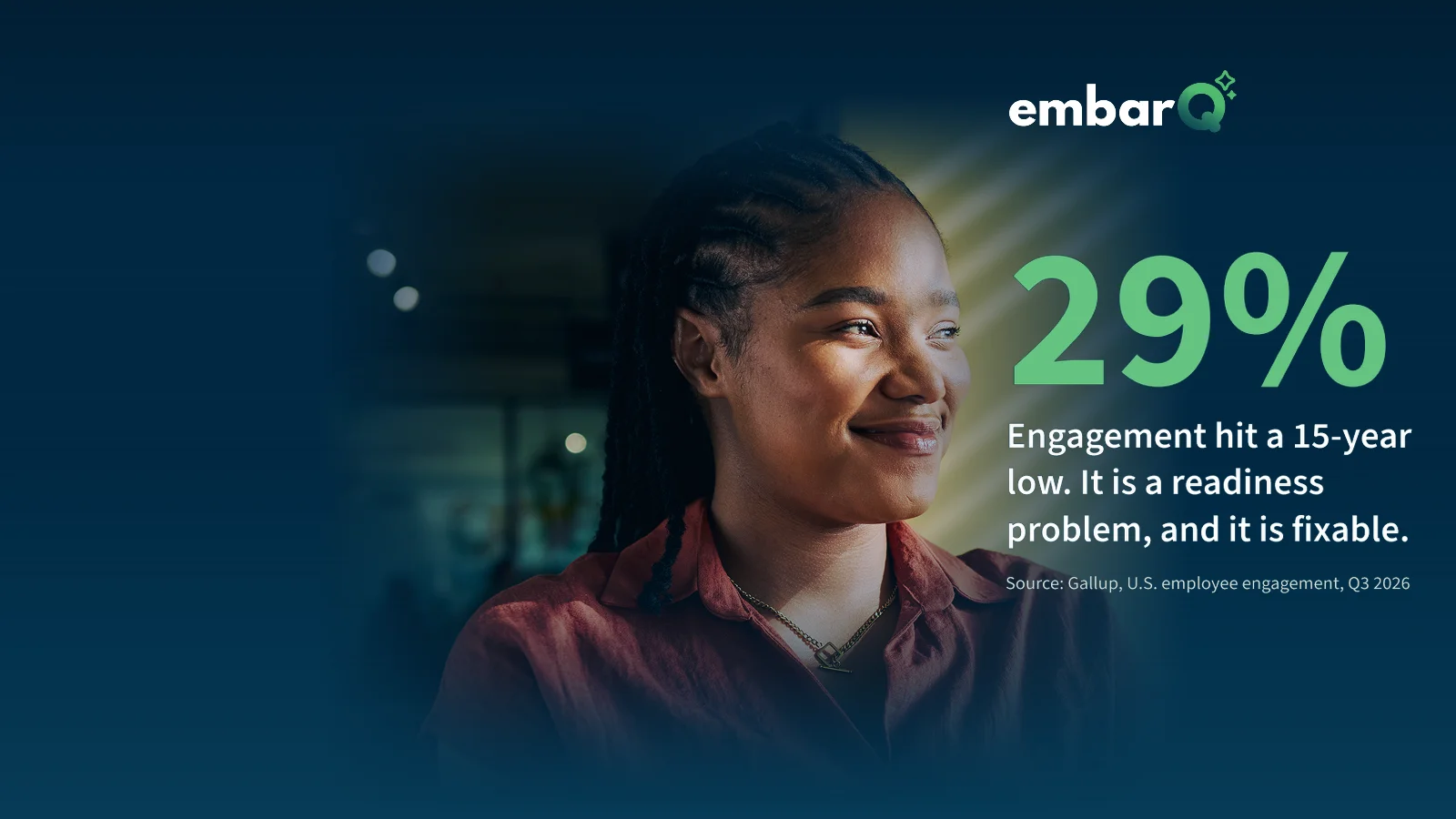
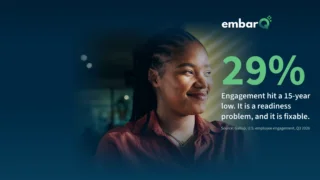
Employee engagement hit 29%, a 15-year low. See which human skills at work connect well-being to culture and performance, and how to measure them.
Employee engagement hit 29%, a 15-year low. See which human skills at work connect well-being to culture and performance, and how to measure them.
By Kizaan Knapp, SVP of Marketing, meQ
For years, the promise has been simple: take care of your people, and good things follow. It is a good promise, and well-being is not going anywhere. But U.S. employee engagement just fell to 29%, its lowest level since 2011, and every line in the people budget is being asked what it does for the business.
Human skills are how you answer. They connect well-being to culture and culture to performance, and they give People Leaders a number to show the board instead of a feeling.
Human skills are the learnable abilities people use to work through change, pressure, and each other: adaptability, resilience, communication, emotional regulation, and collaboration. At work, they determine how teams handle change, build psychological safety, and perform together. Organizations that build them with rigor create high-performing cultures.
The word “learnable” matters. Many organizations treat these abilities as personality traits, so they hire for them and hope. Human skills respond to structured practice, the same way technical skills do.
Gallup’s quarterly polling tracks workers’ focus, motivation, and enthusiasm for their jobs. Engagement peaked at 36% in 2020, fell to 31% by 2024, and held there through the first half of 2026. Q3 2026 took it to 29%.
CNBC’s coverage adds two details. The decline concentrated among remote and hybrid workers, particularly at organizations that have adopted AI. And it arrived in what has been called a “low-hire, low-fire” job market: stable on the surface, with unemployment edging up and wage growth stagnating. People have fewer places to go, so disengagement shows up in how they work, not in resignations. That last point is our reading, not Gallup’s.
Engagement is where well-being, culture, and performance meet. Right now it is slipping.
Costs are up across benefits, healthcare, and talent. A program valued as a benefit gets judged as a cost, especially when you can’t tie it to a hard-dollar return. In a tight budget cycle, those programs go first.
The deeper problem is structure. Most organizations build well-being, culture, and performance programs separately, with different budgets, different vendors, and no line connecting them. Well-being on its own can’t close that gap. It was never built to.
The leaders we respect most already see this. They are not choosing between caring for people and driving performance. People who are well engage more. Engaged cultures perform better. And performing well gives people the sense of progress that sustains their well-being. Pull on one and the other two move.
Three patterns keep the system disconnected:
More messaging and more programs will not fix this. Better-built human skills will.
Employers are asking for them. Lightcast and America Succeeds found that 76% of job postings request at least one durable skill. The World Economic Forum’s Future of Jobs 2025 ranks resilience, leadership and social influence, and motivation and self-awareness among the top five core skills.
Three deserve priority in an enterprise people strategy.
Adaptability is the capacity to adjust your approach as conditions shift. Change readiness is that capacity measured across a team or an organization: can these people absorb the next change, and how fast?
The Gallup data makes the case. The sharpest Q3 drop came from remote and hybrid workers at organizations that adopted AI. Gallup reports the pattern and does not name a cause. It still looks like a change readiness gap: new technology arrives, and teams have not built the skills to absorb it. We cover the human side in the antidote to AI anxiety in your workforce.
A baseline before a major rollout shows which teams will absorb the change and which will stall. One global manufacturer trained more than 15,000 managers and executives in change readiness ahead of transformation work.
Psychological safety is the shared belief that people can raise a concern, admit a mistake, or challenge an idea without penalty. It is often discussed as a team mood. It is better understood as a set of manager behaviors: inviting dissent, responding to bad news without blame, and closing the loop on what was raised.
Those behaviors are skills, so they can be practiced. They matter most when work is dispersed. A remote or hybrid manager can’t read the room, so safety has to be built on purpose. It also protects your change data, because problems stay hidden when people don’t feel safe.
Resilience is the ability to recover from setbacks and think clearly under pressure. It sits underneath nearly every other human skill, because a manager who can’t regulate a stress response can’t listen well, give feedback, or hold a team steady. Our approach rests on peer-reviewed resilience science. For a primer, see what workforce resilience is.
An executive sponsor. More than half of our customers have a CHRO or CEO behind the work, someone who treats resilience as a lever for performance and not as an add-on.
The clearest example is a financial services company with 270,000 employees. Its CEO made organizational resilience a strategic priority, visible to the board, and invested in change management for its leaders. Within a year, 20% of employees enrolled, more than 54,000 people, and the company reported a 14% lift in resilience. Across customers, results include 18% lower turnover.
The software was not the difference. The sponsor was. Those leaders did not set well-being aside. They connected it to performance, so they got performance-grade answers.
Scale breaks most skill-building programs. Three requirements hold it together.
A skill nobody practices does not compound. Participation is the first signal, and customers see engagement near 30%, roughly ten times what typical EAP programs achieve.
You can’t prove what you measure once a year. Continuous measurement gives you three views for the boardroom:
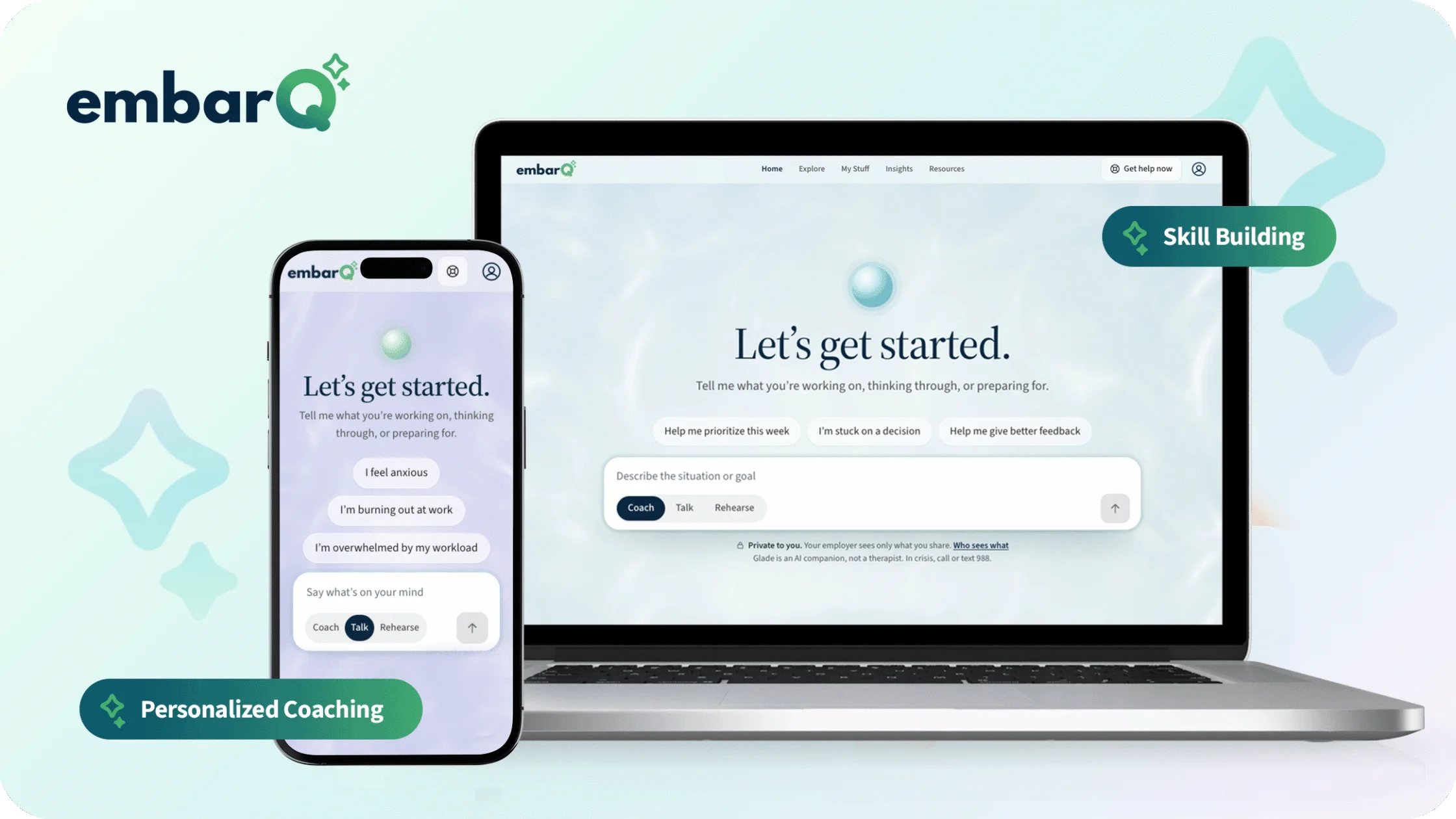
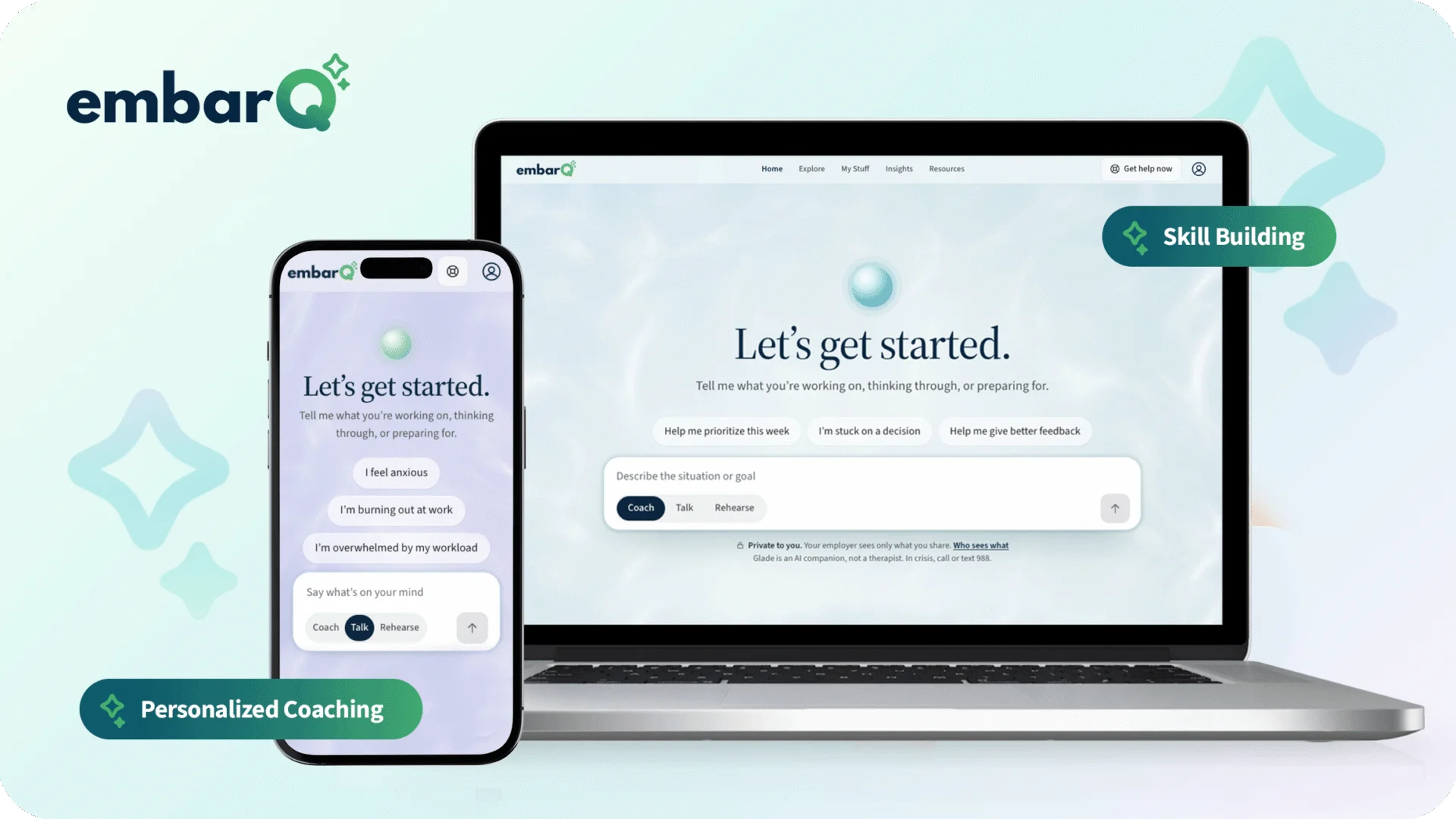
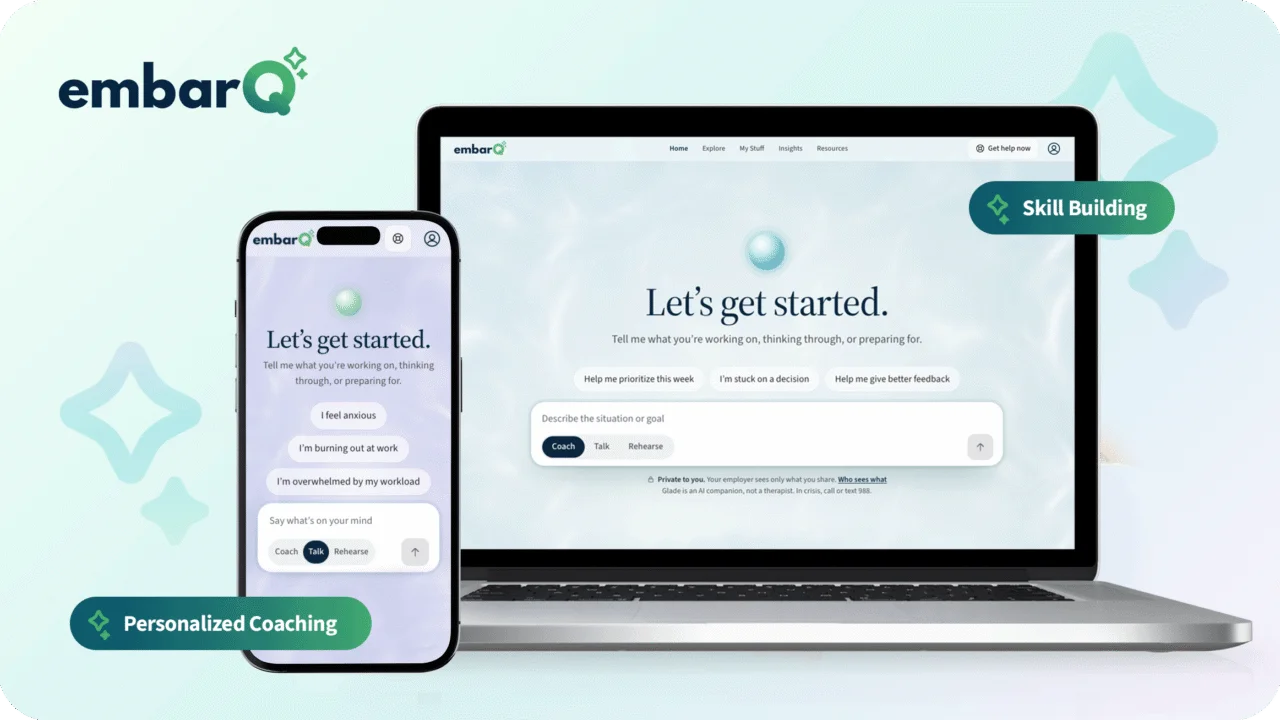
That is the design behind embarQ, powered by meQ, the Human Skills Engine for High-Performing Cultures. It gathers culture and human-skills data continuously, builds skills through personalized, science-backed practice, and rolls individual growth up into culture-level performance you can report.
Privacy holds this together. Managers see aggregate, privacy-safe team health. Individual skill-building data stays separate and private.
Three moves:
Well-being made the promise. Human skills deliver on it. Start where Gallup found the drop: your remote and hybrid teams and the teams absorbing AI. Baseline their change readiness, then build the skills that close the gap.
Ready to see how change readiness is measured and built across your teams? See embarQ live. Book a demo.