























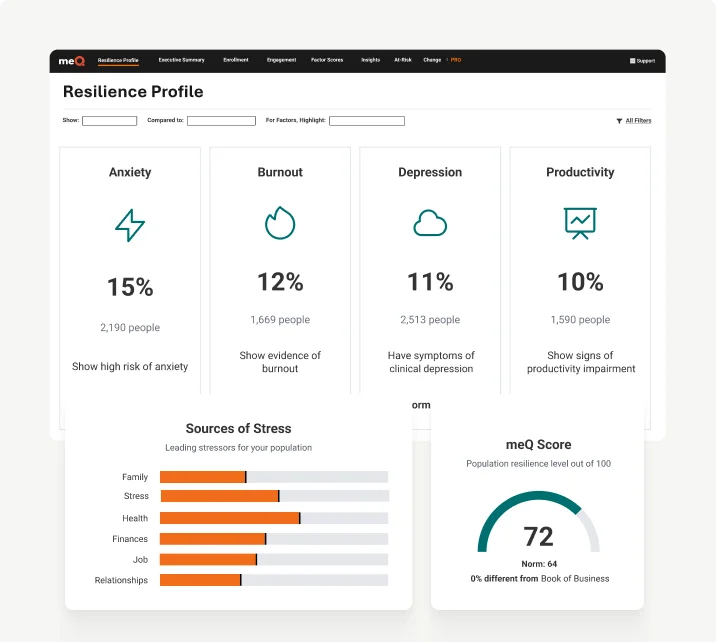






























meQ helps insurance carriers detect burnout and attrition risk in claims, underwriting, and service teams.
Claims adjusters, underwriters, and service teams operate under occupational stress that generic wellness programs weren't designed to address. meQ identifies where strain is accumulating and delivers precise interventions aligned to the specific resilience factors at risk within each role.
Disability, workers' comp, and life claims processors work in traumatic situations every day. meQ targets the exact resilience factors their daily work erodes — Emotion Control, Stress Management, Energy, and Sleep.
Complex risk decisions under volume pressure create a different stress profile. meQ helps underwriters maintain judgment, focus, and decisiveness across long review cycles and shifting market conditions.
High-volume, high-emotion customer contact creates structural burnout risk. meQ identifies teams trending toward mass attrition before resignation letters arrive — at $15K–$25K per replacement.
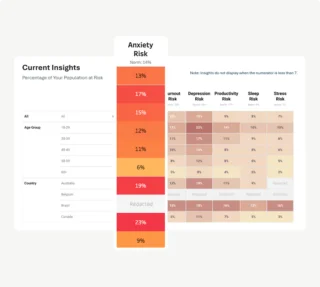
Insurance companies have the actuarial expertise to value prevention. meQ makes workforce risk visible, quantifiable, and manageable, using the frameworks your business already runs on.
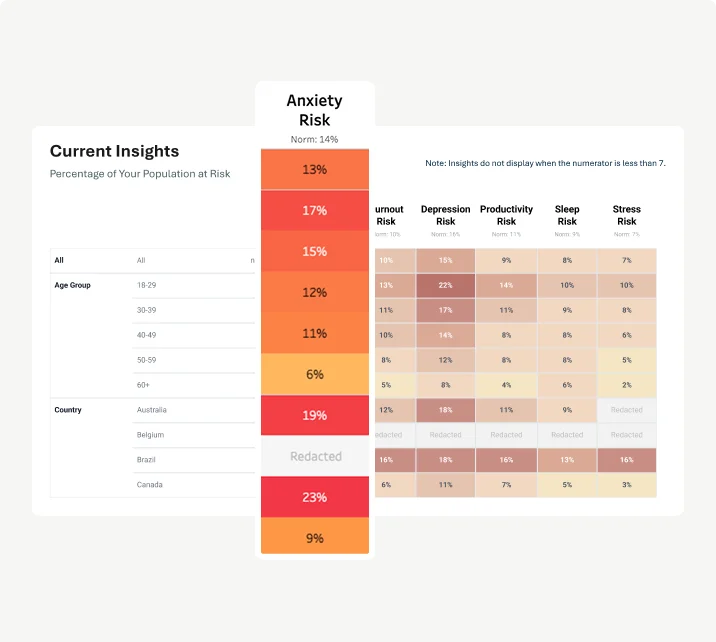
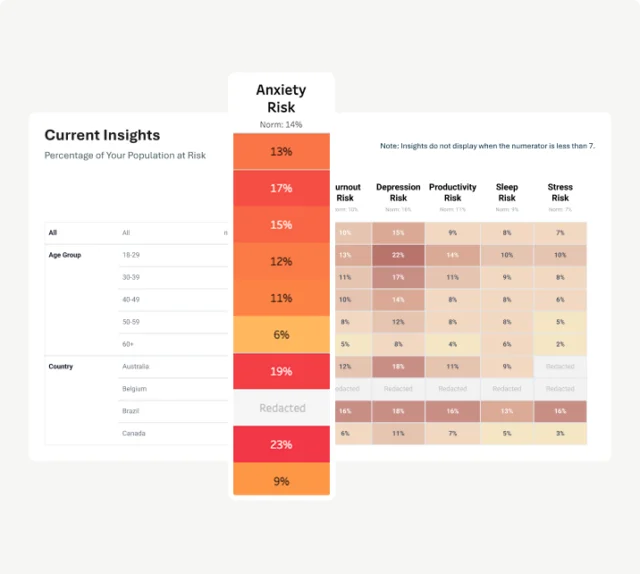
meQ embeds directly into leave management and absence tracking workflows, so your team sees predictive risk data alongside the standard absence data they already work with.
Reduction in
disability leave
Lower annual
healthcare costs
per member
Decrease in
depression risk
meQ helps insurance carriers detect burnout and attrition risk early, support the teams carrying the hardest work, and convert workforce well-being into measurable cost avoidance.
Member services, care coordination, and case management teams regularly support members through some of the most stressful moments of their lives. meQ addresses this by prescribing resilience skills based on each individual's specific stress profile — helping staff reset between difficult interactions before empathy fatigue escalates into burnout or attrition.
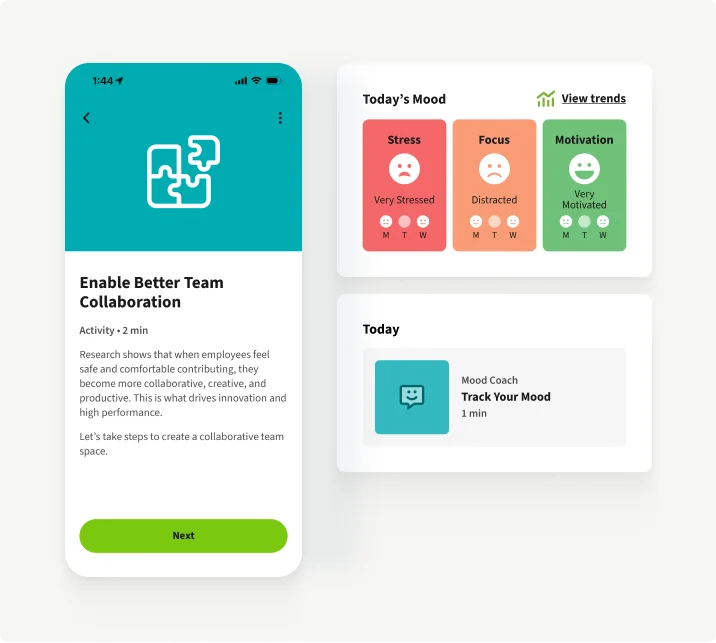
Having access to benefits and actually using them when stress is building are two different things. meQ acts as an intelligent "front door." meeting employees where they are, in the flow of work, before they reach a crisis point. It makes your existing benefits ecosystem work harder by routing the right employees to the right resources at the right time.
Many health plan organizations position meQ's self-service content as a professional development and leadership effectiveness tool, focusing on performance, engagement, and change management rather than leading with wellness language. Engaging a core group of power users, such as team leads and managers, can create organic momentum across the broader organization.
Insurance companies already have the actuarial expertise to value prevention. meQ translates workforce resilience into the metrics your finance and risk leaders already track: turnover cost avoidance at $15K–$25K per claims-role replacement, disability leave reduction, and reclaimed productivity. The ROI model uses published methodology, not utilization rates.
meQ's predictive assessments can detect emerging stress signals across your workforce in real time — so you can proactively deploy targeted resilience campaigns to at-risk teams before peak-season pressure turns into attrition. And if a critical incident occurs, meQ can deploy on-site support and leadership coaching within 24 hours.
meQ complements your existing EAP by acting as an intelligent navigation hub. It identifies employees who need higher levels of support and routes them to your EAP or clinical resources before issues escalate. And if your current EAP is underperforming or you're consolidating vendors, meQ offers a fully integrated EAP that covers the entire acuity continuum within a single platform.
Yes. Claims adjuster burnout looks different from underwriter burnout, which looks different from service team burnout. meQ recognizes the distinct resilience patterns across claims operations, underwriting, customer service, and corporate functions — and delivers interventions matched to each role's actual stress profile.
meQ embeds into your leave management and absence tracking infrastructure, surfacing predictive risk data alongside standard absence data. Your leave team sees which cohorts are trending toward disability claims before the claims are filed, upstream visibility that turns leave management from reactive to preventive.
Yes. meQ deploys across traditional carriers, third-party administrators, captive insurers, and self-insured organizations. The platform's role-aware model adapts to whatever mix of claims, underwriting, and service functions exists in your organization.
Connect with our team see how meQ can support your organization.