Why Wellbeing Can’t Be Your Only Strategy
A well-being strategy is the foundation, not the whole plan. See how embarQ, the Human Skills Engine, links well-being, culture, and performance.
A well-being strategy is the foundation, not the whole plan. See how embarQ, the Human Skills Engine, links well-being, culture, and performance.
By Brad Swingruber, CEO, meQ
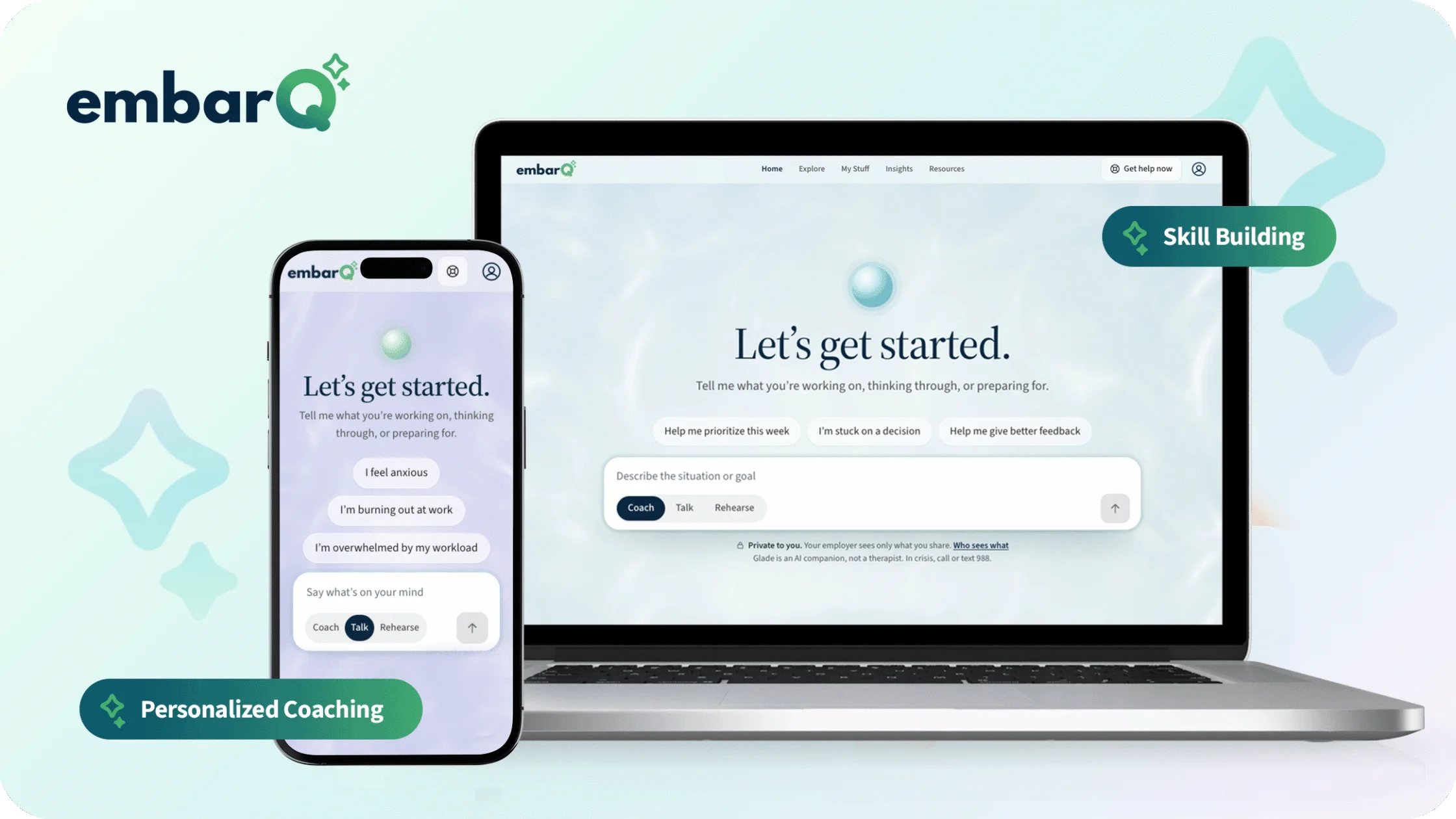
Well-being matters, but with costs rising it can't be your only strategy. meQ's embarQ, the Human Skills Engine for High-Performing Cultures, connects well-being, culture, and performance by measuring culture continuously and building the human skills behind it, so People Leaders can show the board a number, not a feeling.
For years, the industry has made the same promise: take care of your people, and good things follow. It is a good promise, and many of you built real well-being strategy on it. Many leading brands built theirs with us. Let me be clear: well-being is not going anywhere. It is the foundation of a workforce that can do its best work.
But the ground has shifted. Costs are up across benefits, healthcare, and talent, and every line in the people budget is being asked the same question: what does this do for the business? A program valued as a benefit gets judged as a cost, especially if you can’t tie it to a hard-dollar ROI or clear value. In a tight budget cycle, these nice-to-haves go first.
The People Leaders (CPO, CHRO, VP of Benefits, and more) I respect most already see this. They are not choosing between caring for people and driving performance. They know well-being, culture, and performance are one system. People who are well engage more. Engaged cultures perform better. And performing well gives people the sense of progress that sustains their well-being. Pull on one and the other two move.
The problem is that most organizations build their well-being strategy, culture, and performance programs separately, with different budgets, different vendors, and no line connecting them. That is the gap, and well-being on its own can’t close it. It was never built to.
I recently spoke with a customer who is closing it by starting somewhere simple: their company values. They brought key stakeholders together to align on those values as a common theme, and with their CEO behind it, they turned it into a cause that touches every person in the organization. That is what a united front looks like. Because it reflects the DNA of the company, employees and managers are already engaging with it in a big way.
Beyond that one story, a broader pattern stands out across our book of business. More than half of our customers have an executive sponsor, often the CEO, who treated resilience as a lever for performance, not a perk.
The strongest example is one of our global financial services companies. Its CEO named organizational resilience a strategic priority, visible to the board. They invested in change management for their leaders and within one year, 20% of the workforce enrolled, more than 50K employees. Employee resilience and change readiness improved by almost 15%, and the company projects over $60M in gains from that improvement.
The tool was not the difference. The conversation was. Those leaders did not set well-being aside. They connected it to performance, so they got performance-grade answers.
Engagement is where well-being, culture, and performance meet, and right now it is slipping. Gallup’s State of the Global Workplace 2026 reports that global engagement fell to 20% in 2025, the lowest since 2020, and costs an estimated $10T in lost productivity. A January 2026 Harvard Business Review article argues that campaigns and one-off training rarely shift how people act, and recommends targeting one high-impact behavior and testing the result.
More messaging and more programs will not close that gap on their own. Better-built human skills will.
Our thesis is simple: human skills, built with rigor at the individual and team level, are the bridge between well-being, culture, and performance. They are how people feel supported and how a culture actually changes.
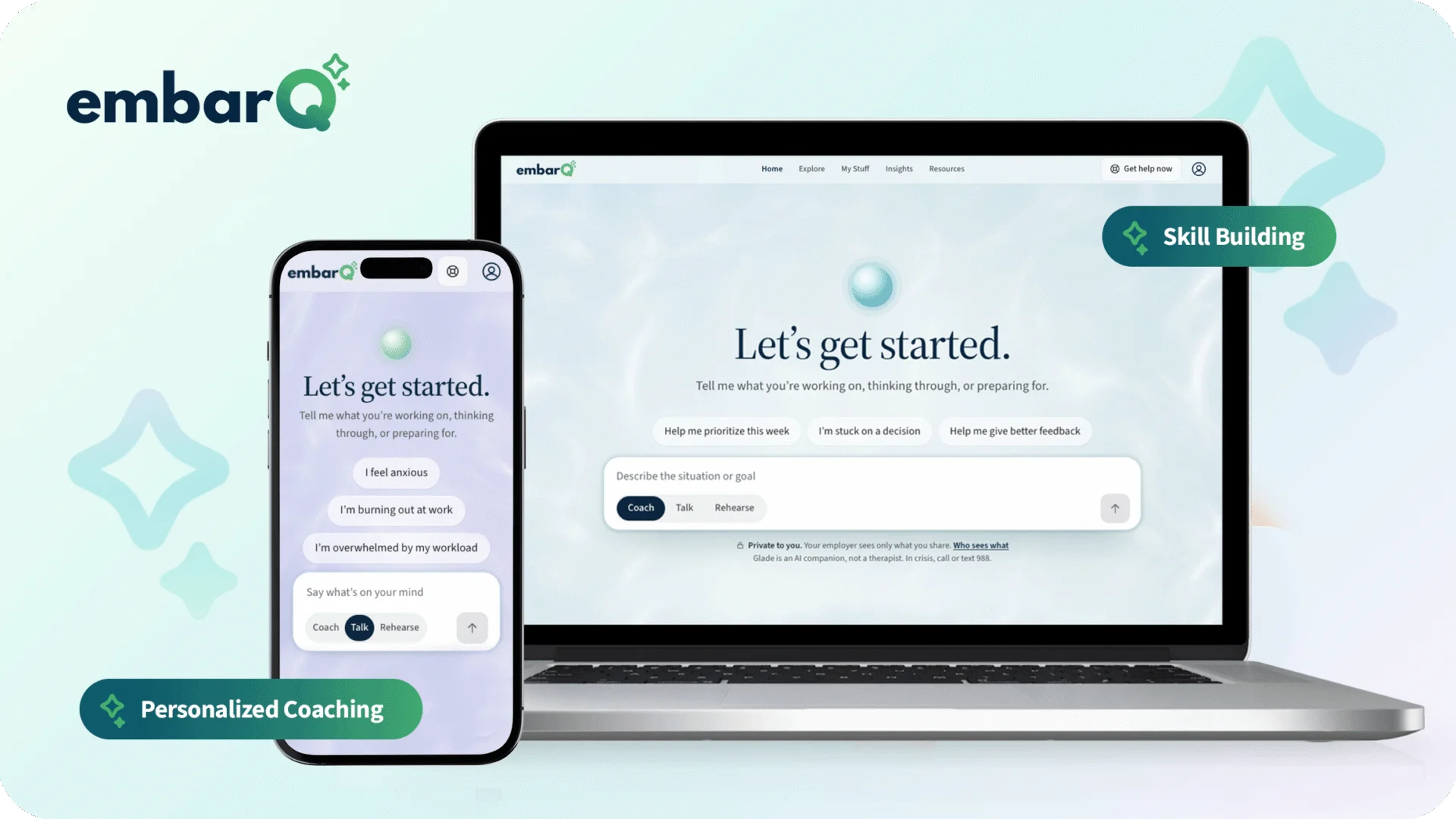
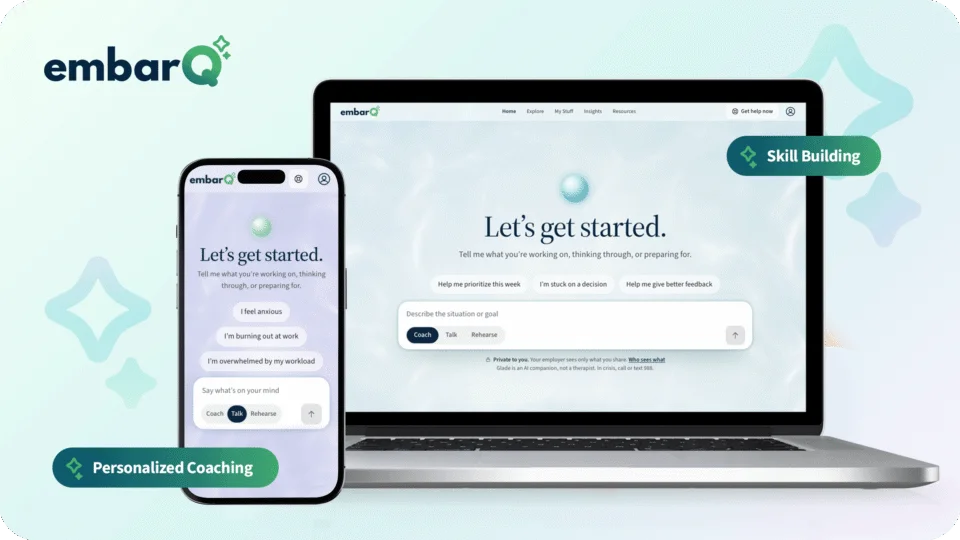
If you know us for resilience and well-being, you already have the foundation. That is why we introduced the next evolution of our platform, embarQ - powered by meQ. embarQ is the Human Skills Engine for High-Performing Cultures. It does three things:
The result is three scores a People Leader can take into any boardroom: a Culture Index built around your own values, a Resilience Index built on validated science, and a Psychosocial Score that adds risk visibility by team (future release).
I want to be direct with our customers and partners. meQ is still the company, and your people still get the support they have come to rely on. The science stays: meQ’s peer-reviewed resilience science, built on 18 resilience factors across three domains and published in the Journal of Occupational and Environmental Medicine, is the foundation of embarQ. Every customer relationship stays in place.
What changes is the name on the platform you log into, the story we tell your leadership team, and a rebuilt experience personalized to your own values.
If you lead people at a large enterprise, I am asking you to do three things:
If the answer is a satisfaction score, that is a nice-to-have. If the answer is a number your board tracks, that is a system.
A strong well-being strategy and proof that it moves the business are not competing goals. We built embarQ for leaders who want to do both.
See embarQ live. Book a demo.