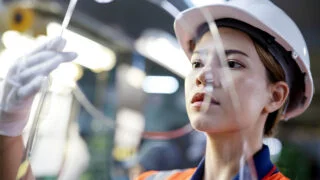
A product recall doesn't begin with a failed component. It begins with a person who notices something, weighs whether to say it out loud, and chooses to stay silent.
The conditions that produce that silence, like stress, fear, or exhausted managers, show up in your workforce data before they show up in your quality reports. HR has access to that data. The question is whether it's connected to the right decisions.
The Human Chain Behind Every Recall
When a device fails, the investigation focuses on what went wrong on a technical level. But a critical question rarely gets asked with the same rigor. Why didn't anyone say something sooner?
Across manufacturing organizations, the pattern appears: a team is under sustained production pressure, schedules are tight, and the culture has shifted to one where raising concerns feels like slowing things down.
A technician who would have flagged an issue in the past now hesitates. The concern goes unvoiced. The device moves forward.
This is not a story about a bad employee. It's a story about a workforce operating under conditions that made silence feel safer than speaking up.
Behind every recall is a chain of human decisions. The question is what made silence feel like the safer option.
Speak-Up Culture Is a Quality Metric
Quality systems, documentation, and process controls get rigorous attention in regulated manufacturing. The conditions that allow those systems to work as intended get far less.
A delay of even one day in reporting a workplace incident can increase the chance of a recordable outcome by about 60%. The biggest driver of that delay is not process, but whether people feel safe raising a hand.
meQ's research shows that strong managers boost their team's willingness to speak up by as much as 42%. In well-supported teams:
- Employees raise concerns before they escalate.
- Difficult issues get discussed, not buried.
- Mistakes are less likely to be hidden out of fear.
In teams where that support is absent, the dynamic reverses. Problems stay underground until they can't anymore. For a medical device manufacturer, that underground period is exactly when a product defect can reach a patient.
The gap between when someone first noticed something and when the formal process caught it is often a people problem, not a systems problem.
What a Burned-Out Workforce Looks Like
Even when the culture supports speaking up, a team under chronic stress makes more mistakes. It's not a character issue. It's a cognitive one.
meQ's research identifies seven warning signs that show up in workforce data before they show up as errors:
- Physical symptoms: headaches, back pain, stomach problems
- Lack of work-life balance
- Dissatisfaction with life outside work
- Difficulty managing emotions
These are not soft signals. They predict the kind of deterioration that leads to errors on a precision manufacturing floor.
An exhausted and emotionally depleted worker is not less dedicated. They are less able. That distinction matters, and it's one HR leaders in this industry can act on before it becomes a quality event.
Proactive Quality Control
Another common pattern? Elevated stress and low trust are concentrated in specific production units, but the signs are invisible to both HR and quality teams from the outside.
In our work with a large global manufacturing company, our proactive intelligence platform identified departments at that elevated risk. Employees in one unit were struggling with the physical warning signs of disrupted sleep, pain, and irregular eating and exercise patterns.
Equipped with these predictive insights, we supported the company in deploying a targeted intervention. The result was a double-digit reduction in depression risk, and measurable improvement in the flagged factors, the same ones that precede errors on a production floor.
What HR Leaders Can Do
The conversation about recall risk is owned by quality and regulatory teams. But the workforce conditions that come before a quality failure belong to HR. Three things make a real difference:
- Measure how safe people feel to speak up, at the team level, not just in annual surveys. What you need is current and specific, not averaged and delayed.
- Track the physical and emotional warning signs in your highest-risk production units. Sleep disruption and chronic stress in a team assembling implantable devices is a quality risk, not just a well-being concern.
- Invest in your managers. A manager who knows how to support their team creates the environment where people speak up. That's where quality starts.
There's also a regulatory dimension worth knowing. ISO 45003, the first global standard for managing workforce mental health risk, treats psychological hazards the same way physical ones are treated. Australia has already made this mandatory. The US has been moving in the same direction for several years.
The organizations that get this right treat workforce resilience as an operational safeguard, and won’t be scrambling to catch up with their competitors.
The Early Warning System Your QC Team Needs
meQ is built to measure the workforce risks that predict product risks: how safe people feel to speak up, how close they are to burning out, and where managers need support — at the team level, in real time, before the product hits the floor.
The manufacturing case study above is not an outlier. It's what happens when organizations can see workforce risk. A double-digit reduction in depression risk from a single targeted intervention is what early visibility makes possible.
The regulatory direction is clear. Organizations that build this infrastructure now will be better positioned legally, operationally, and on the metric that matters most in this industry: patient safety.
Catch the Problem Before the Patient Does
meQ's predictive analytics platform gives HR and quality leaders real-time visibility into the workforce conditions that precede errors and compliance failures. If you're working in medical device manufacturing and want to understand what your data could be telling you, book a demo with our team.