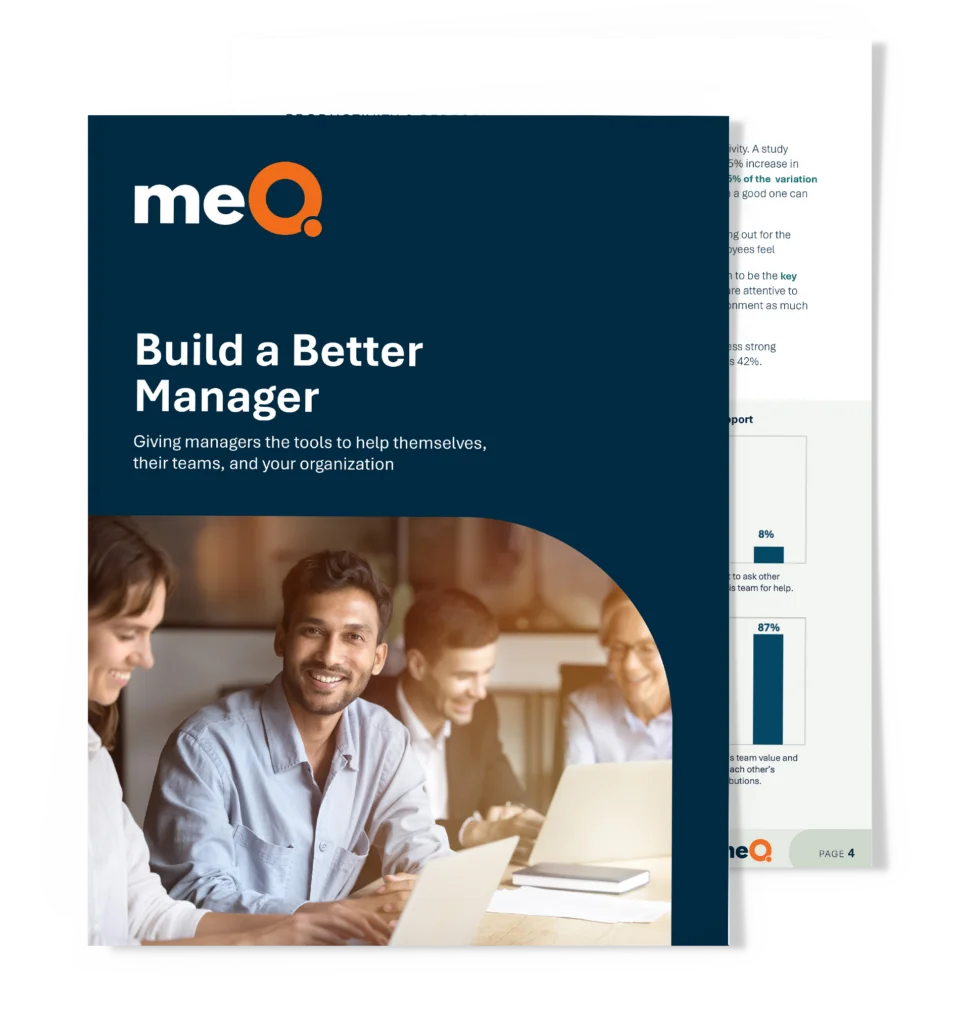
5 Steps to Leveraging Your Greatest Retention Asset
Research shows that a manager has as much impact on employee well-being as their spouse.
Yet most managers have never been taught the skills that could transform both team performance and your bottom line
UKG's Workforce Institute found that 69% of employees say their manager affects their mental health as powerfully as their partner, and substantially more than their doctor or therapist.
Yet most managers have never been taught the skills that could transform both team performance and your bottom line: how to check in on emotions.
The Numbers Don't Lie
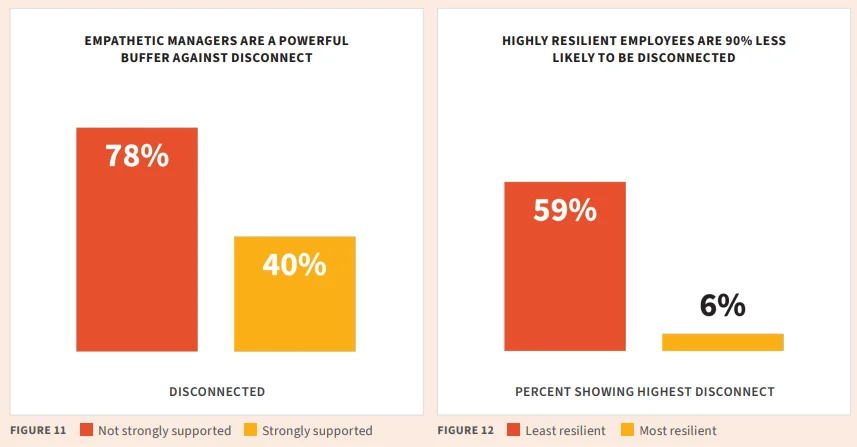
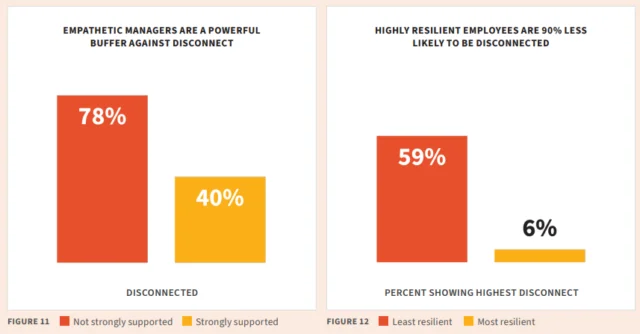
The business case is clear. Employees who don't feel supported by their manager are 4.5 times more likely to quit (17.4% vs. 3.8% considering leaving their job).
Meanwhile, managers account for up to 70% of the variation in employee engagement scores, making them either your greatest asset... or your costliest liability.
Source: meQ 2025 State of the Workforce Report
The 5-Step Framework That Drives Results
The solution requires structured, evidence-based training that equips managers with practical emotional intelligence skills.
The most effective programs focus on 5 core competencies that drive the measurable outcomes outlined above.
Step 1: Check Your Own Emotions
Before you can help anyone else, do a gut-check. Your own anxiety and frustration can't contaminate this conversation.
This isn't about perfection — it's about showing up grounded enough to be present for your team member.
Step 2: Recognize the Emotion the Other Person Is Feeling
Look for signals in body language, tone, and behavior. Anxiety often appears as overthinking details or rushed speech. Frustration shows up in tense shoulders or clipped responses.
These emotions spread through teams like wildfire, so early detection prevents organizational contagion.
Step 3: Use the Emotion Map
Each emotion points to a specific underlying need. Anxiety signals a perceived threat ("this could go badly"). Frustration indicates resource scarcity ("I don't have what I need to succeed"). Anger suggests violated expectations ("this isn't fair").
Understanding the root cause allows you to address the real issue, not just the symptom.
Step 4: Start a Conversation
Try direct but compassionate approaches: "You seem frustrated — am I reading that right?" or "You don't seem like yourself today. Want to talk about what's on your mind?"
Listen actively, validate where appropriate, and be candid. You're not solving every problem; you're creating psychological safety where people feel seen and supported.
Step 5: Savor the Moment
Acknowledge what went well and reinforce your own positive leadership behaviors. If the conversation didn't land perfectly, reflect on what you'd do differently next time, then move forward.
This skill improves with practice.
The ROI of Emotional Intelligence
The average cost to replace an employee ranges from 50–200% of their annual salary. For a manager earning $80,000, that's $40,000–$160,000 in replacement costs. When unsupported employees are 4.5 times more likely to quit, the math becomes unavoidable: every manager you don't train in emotional check-ins is a retention liability walking around your organization.
The productivity gains are compelling. With individual managers driving up to 35% of team productivity variation, improving management effectiveness through emotional intelligence training delivers measurable returns. Organizations that improve management practices see an average 25% productivity increase — for a 50-person team, that could translate to millions in additional output annually.
Consider the healthcare cost savings alone. Burnout drives significant medical expenses, with stressed employees generating 50% higher healthcare costs. Since supportive managers reduce burnout by 58%, the preventive health benefits compound over time.
Organizations that invest in comprehensive resilience training for both managers and employees — like meQ's evidence-based approach — see concrete results: up to 25% reduction in disability leave and $496 in annual healthcare cost savings per employee. For a 1,000-person organization, that's nearly half a million dollars in direct healthcare savings annually, before factoring in reduced absenteeism, lower workers' compensation claims, and decreased turnover costs.
The Multiplier Effect
When managers practice emotional check-ins, the ripple effects are measurable. Well-supported employees show 58% lower burnout rates and are 25% less likely to struggle with stress symptoms.
But the benefits extend beyond individual wellness.
Teams with emotionally intelligent managers demonstrate 42% better psychological safety — the key factor driving innovation and creative output. These environments foster the kind of risk-taking and idea-sharing that fuel competitive advantage.
Research shows that improving management practices leads to a 25% increase in productivity across industries, with individual managers accounting for up to 35% of store-level productivity variation in retail environments.
The Strategic Imperative
Recognize that emotional check-ins aren't soft skills — they're strategic business tools with quantifiable returns. Training your managers in these 5 steps typically costs a fraction of a single executive departure.