Grind Culture Is Costing MedTech Manufacturers
In medical device manufacturing, grind culture doesn't drive performance. It drives errors. Resilience does the job better, and the data proves it.
By Andrew Shatte, Chief Knowledge Officer, meQ
In medical device manufacturing, grind culture doesn't drive performance. It drives errors. Resilience does the job better, and the data proves it.
By Andrew Shatte, Chief Knowledge Officer, meQ
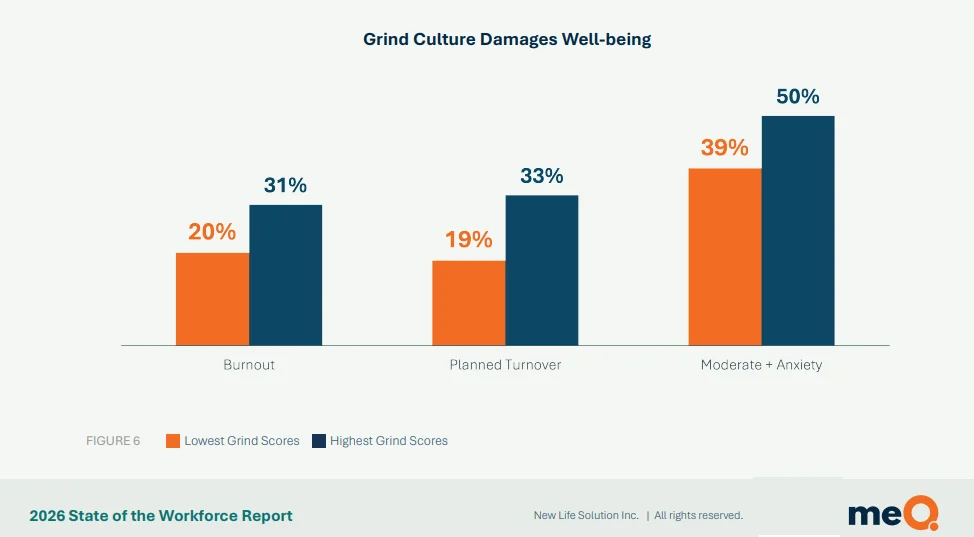
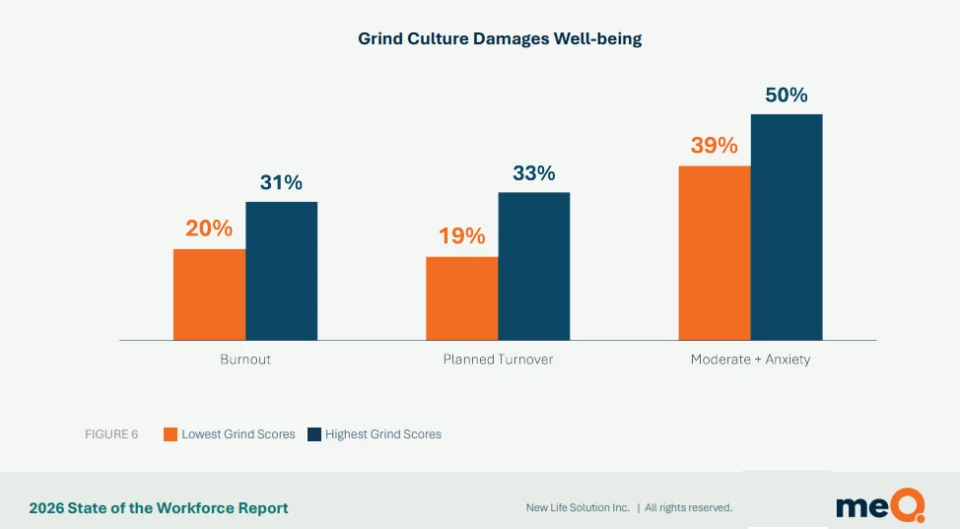
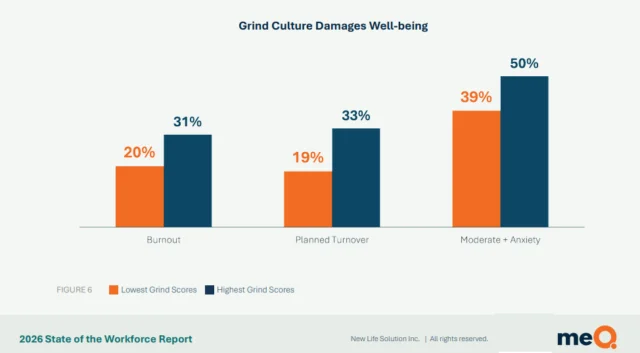
The workers assembling your devices right now are, in many cases, running on a belief system that is making them worse at their jobs. New data from meQ's 2026 State of the Workforce Report shows that employees who most deeply embrace grind culture experience burnout at rates roughly 50% higher than their peers, with anxiety and depression each approaching 50% prevalence.
In a regulated manufacturing environment where a distracted hand or a missed step can trigger a product failure, those are not well-being statistics. They are an operational risk.
Fifty-seven percent of manufacturing workers believe that failing to constantly improve means falling behind—second only to tech workers in our national survey of 2,620 employed adults. That represents a cultural shift most organizations have not caught up to.
The workforce that once prided itself on mastering a stable process now operates under the same relentless performance pressure as a software engineer at a growth-stage startup. The difference is that a software engineer's bad day produces a bug; your team's bad day might produce a recall.
What makes grind culture so difficult to address is that it looks like dedication. The employees who hold these beliefs most intensely are often your most motivated people; the ones who stay late, volunteer for hard projects, and push through when they should rest.
The data exposes what lies underneath that motivation. Across our full survey sample:
The very beliefs that promise achievement are undermining the capacity to sustain it.
These are not motivational postures. They're cognitive patterns that correlate with anxiety, depression, and disengagement. In a precision manufacturing environment, disengagement is not a culture problem. It's a quality problem.
Our research surfaces a finding that should reshape how HR leaders in this industry think about intervention. The least resilient employees are nearly twice as likely to hold damaging grind culture beliefs, and more than four times as likely to believe successful people have no time for pursuits outside their career.
Resilient employees are 33% more likely to believe hard work leads to visible results, and experience 5x greater reductions in stress symptoms than their least resilient peers across a 12-month period. That difference shows up on the shop floor.
The 2026 data points to 4 practical levers for people leaders who want to address grind culture without losing the ambition that drives performance:
Those 4 resilience factors, and what the data shows they deliver, are:
Employees with supportive managers are substantially less likely to believe success requires sacrificing personal relationships (24% vs. 37%) or that successful people have no time for interests outside work (7% vs. 13%). Manager behavior shapes workforce belief systems in ways no awareness campaign can replicate.
In medical device manufacturing, the business case for workforce resilience does not require a soft argument about people. It requires pointing at the hard costs of a workforce operating at elevated anxiety and burnout levels: quality event rates, compliance fatigue, errors that reach the production line.
The grind culture data gives HR and benefits leaders a sharper instrument than engagement survey scores. It identifies the belief patterns that predict which employees are heading toward a crisis before the crisis arrives.
The question for leaders in this industry is not whether grind culture exists in your organization. At 57% of manufacturing workers endorsing the foundational belief that drives it, the odds are high that it does.
The question is whether you are measuring it.
meQ's predictive analytics platform measures the resilience and belief patterns that drive burnout, disengagement, and quality risk across your workforce. If you lead HR, benefits, or operations at a medical device manufacturer and want to understand what your data is telling you, book a demo with our team.