Report: Resilience Promotes a Positive Outlook and Reduces Turnover Intent
Our most recent Workforce Well-being Report shows a large year-over-year spike in job anxiety, yet resilience emerges as a profound protective factor.
Ongoing economic uncertainty and transitions continue fueling workforce stress - but resilience offers organizations major competitive advantages. meQ’s
Fall 2023 Workforce Well-being Report details the ways in which highly resilient employees stand apart in their immunity to turnover triggers, positivity, and performance amid swirling change.
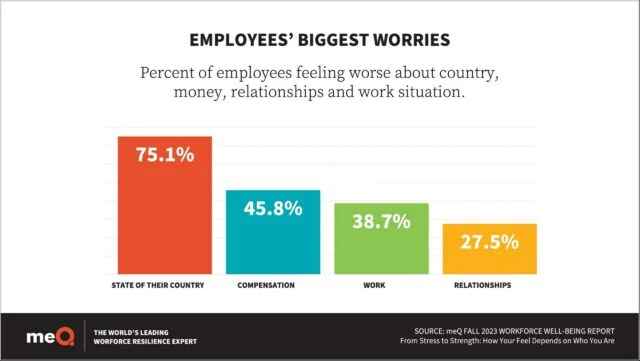
Our study, conducted among more than 4,000 meQ members, maps the mounting vulnerabilities confronting organizations. The most recent round of data show a large year-over-year spike in job anxiety (+38% in the past year) and positivity plummeting across multiple facets of work and life. Yet resilience emerges as a profound protective factor insulating employees from the most common exit drivers.
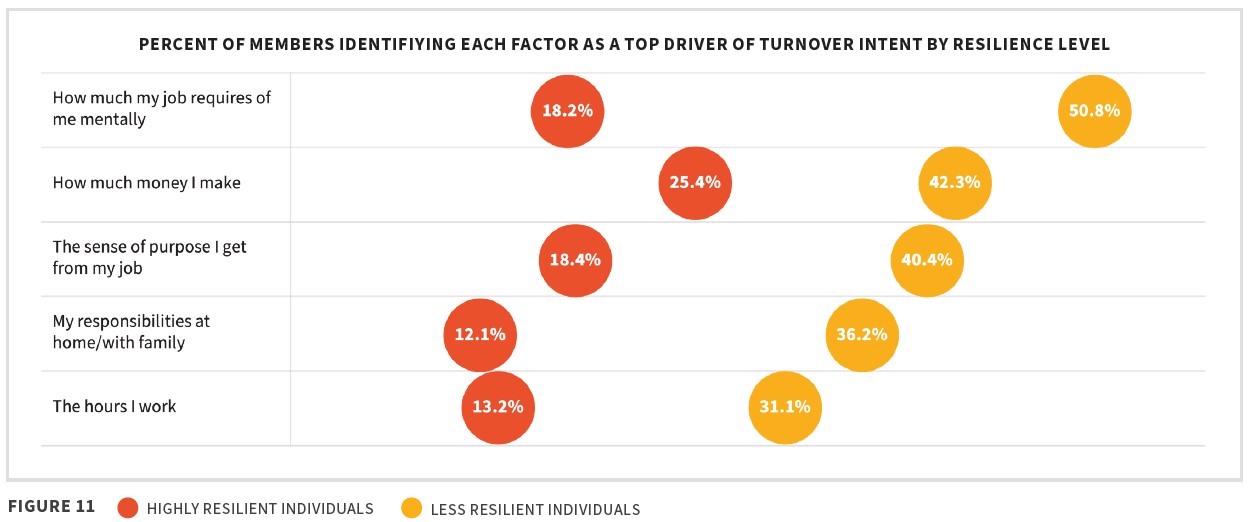
Highly resilient staff are far less likely to cite dynamics like burnout, compensation, work-life balance, or lack of purpose as catalyzing quit intentions compared to less durable colleagues. For example, highly resilient employees exhibit 67% lower susceptibility (12.1% vs 36.2%, Figure 1) to work-life conflicts fueling turnover - a pivotal advantage as the strains of balancing family and work responsibilities persist. By fostering resilience, organizations may be able to strengthen retention, as resilient employees are much less swayed to quit by dynamics like burnout, work-life conflict, limited purpose, and compensation inequality.
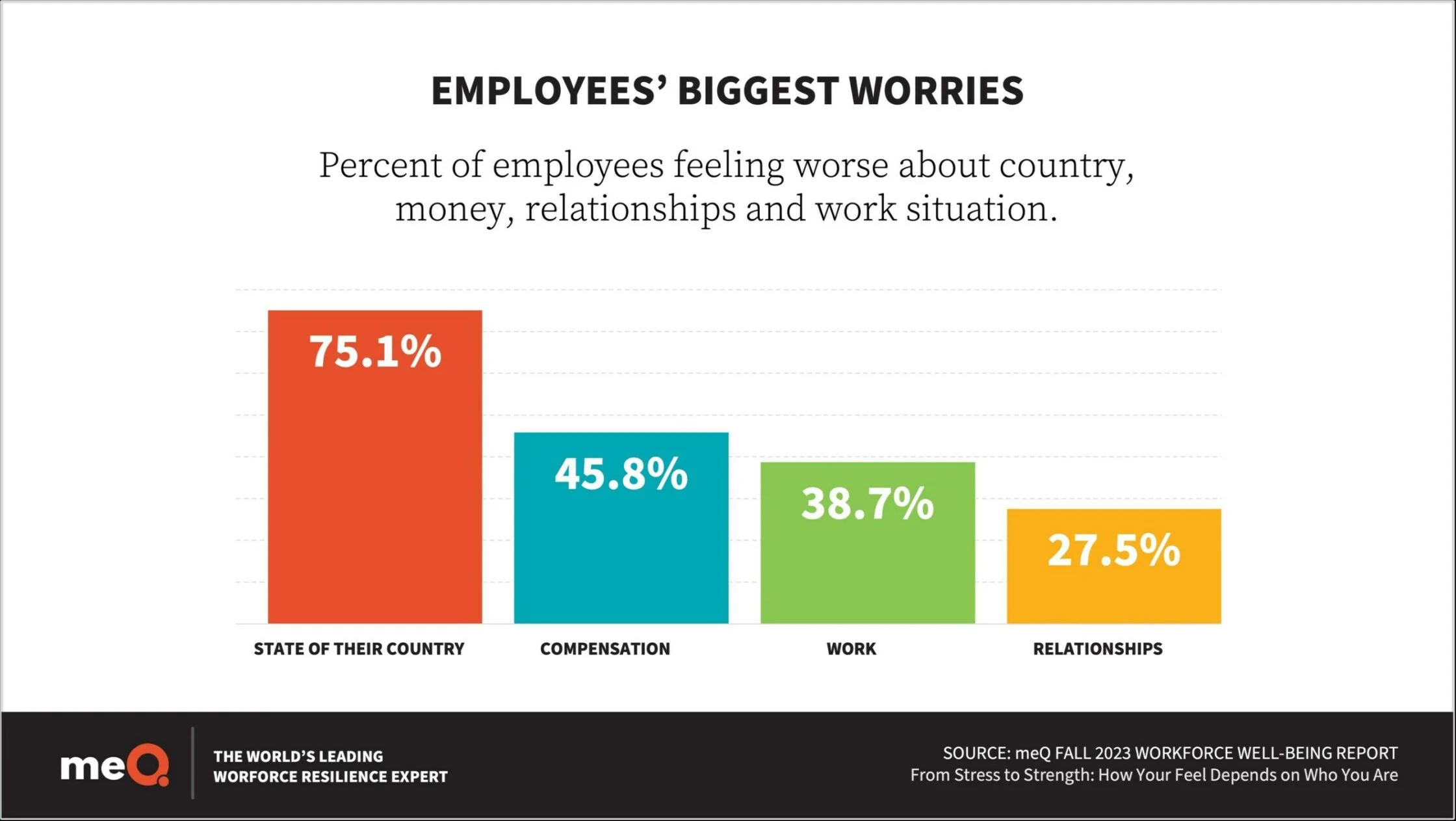
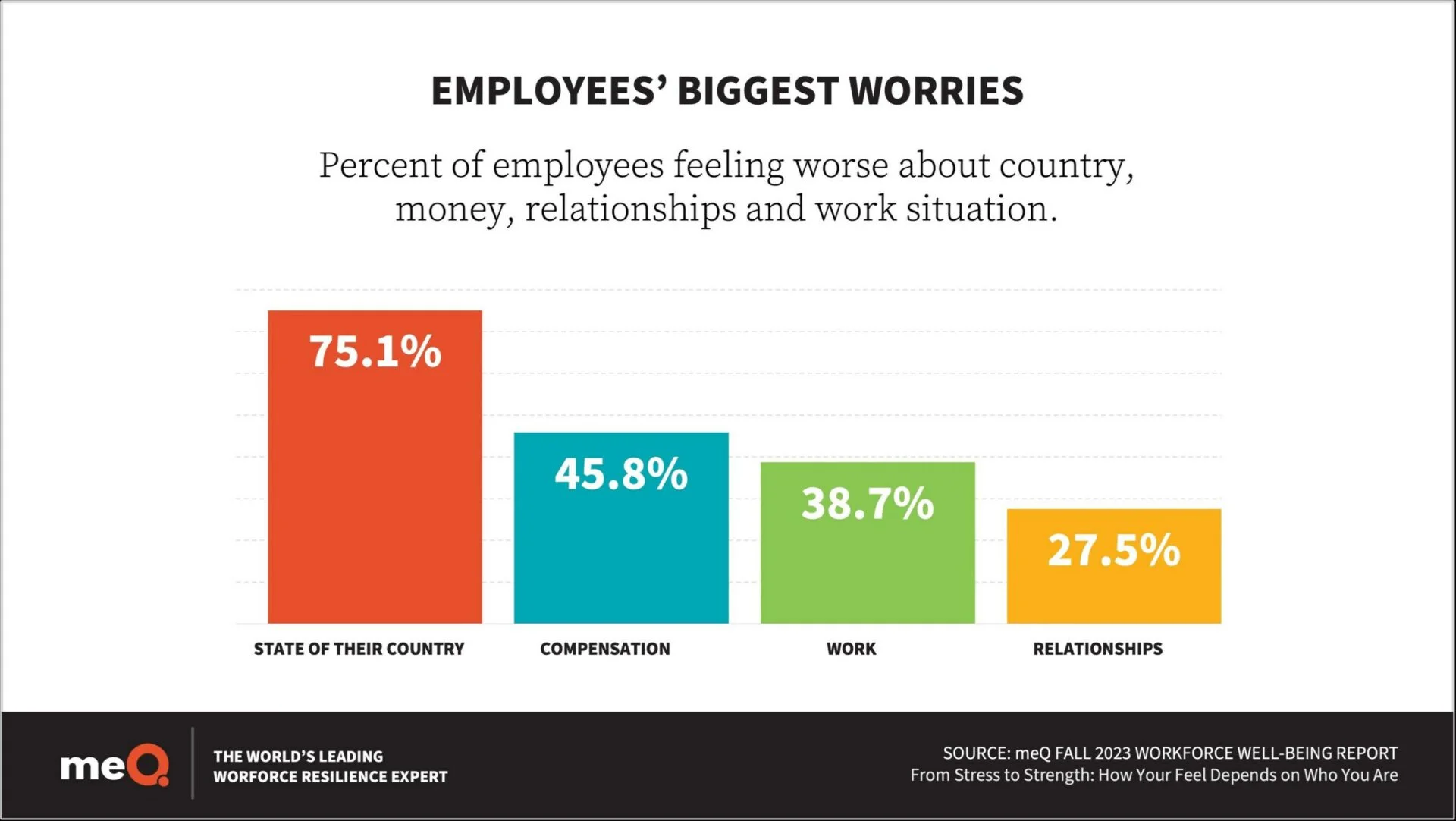
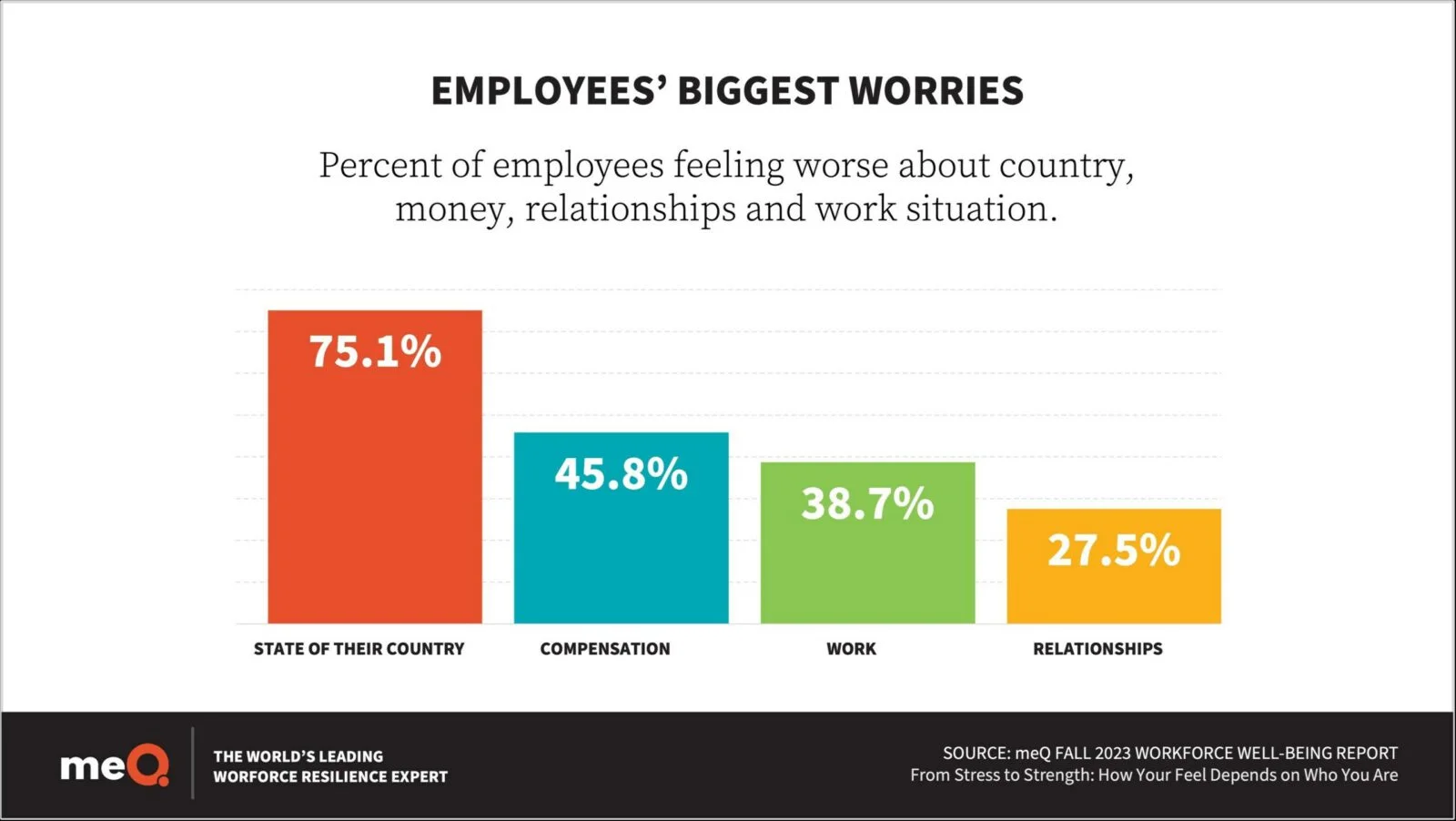
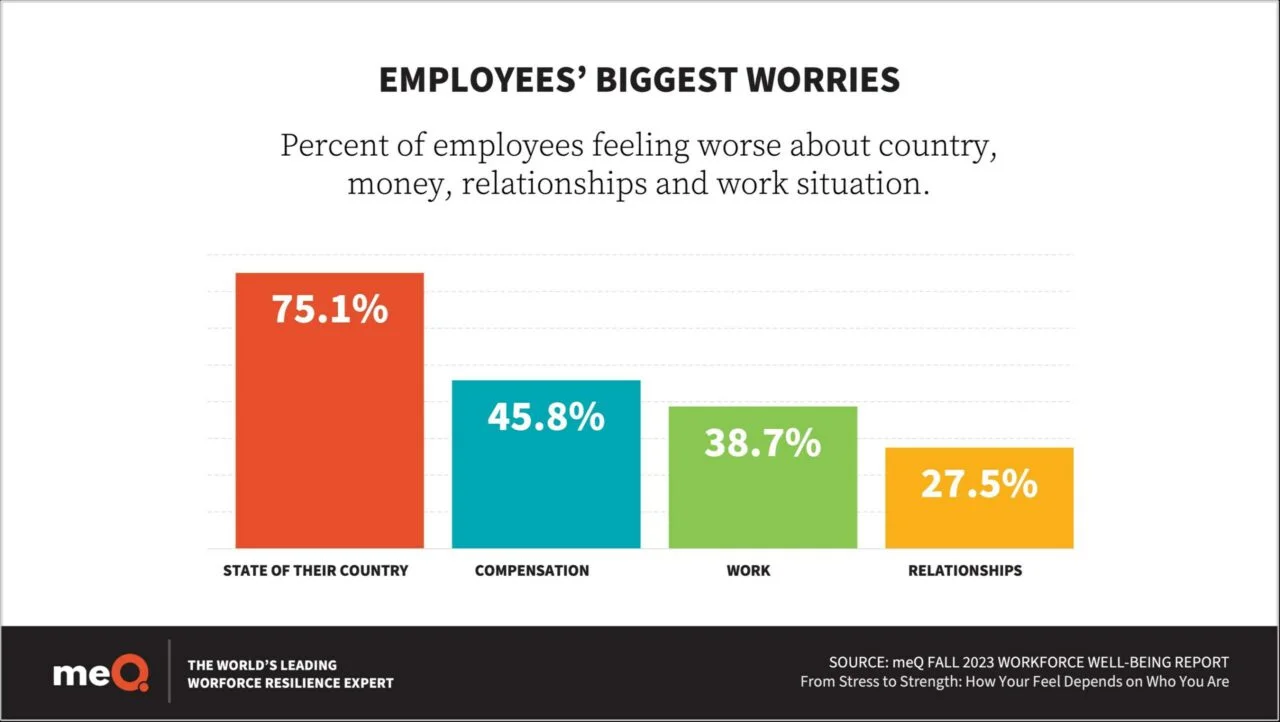
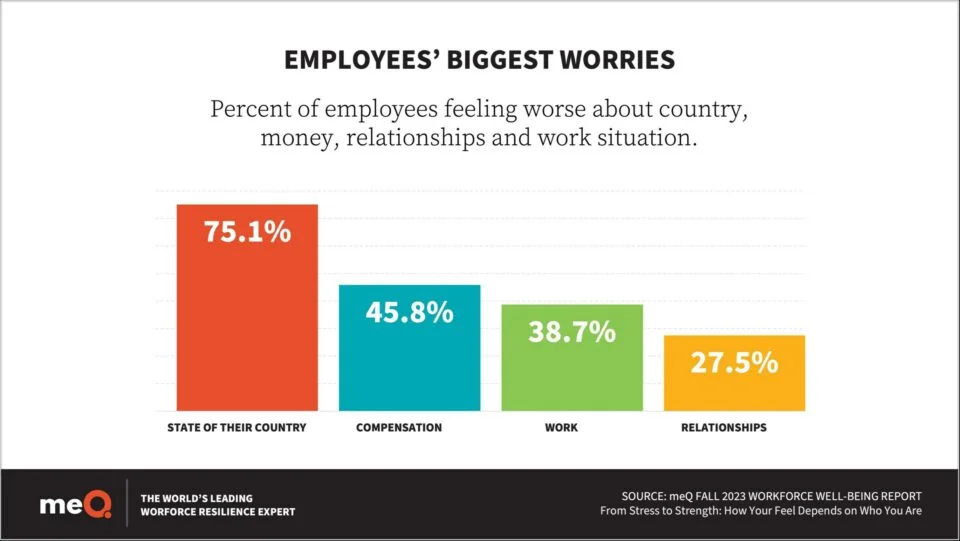
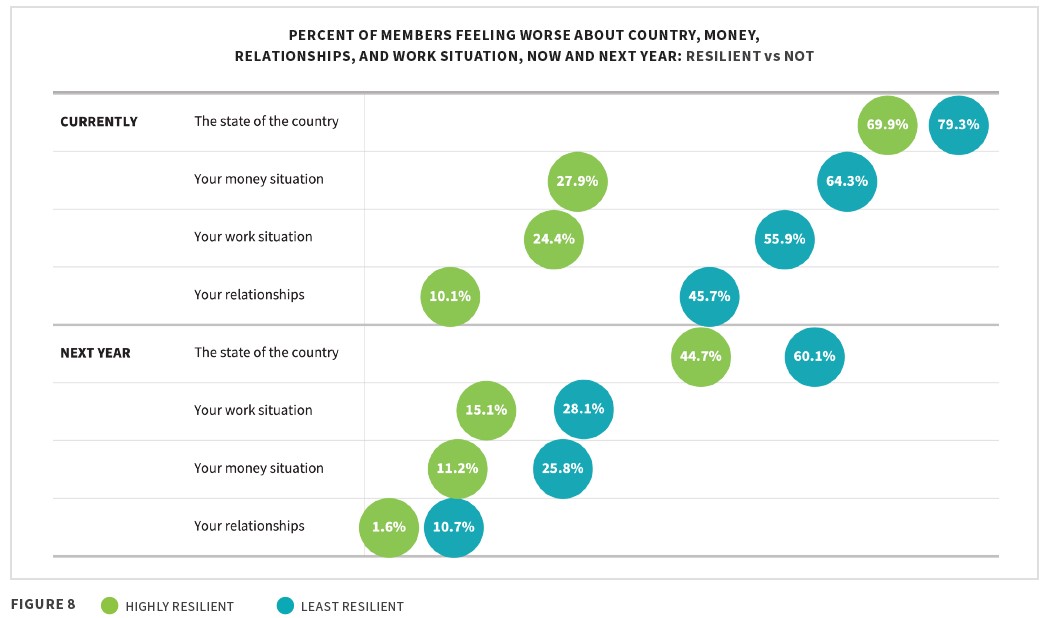
Additionally, in an era of declining positivity, the most resilient workers maintain markedly more upbeat attitudes about their finances, relationships, and work both presently and in the future. Figure 2 shows that resilient employees are significantly less likely to take a negative view of their work, family and money situations. Resilience even moderates the exceptionally negative view that respondents held about the state of their country. The "realistic optimism" conferred by resilience arms individuals to endure adversity and envision better days ahead.
By building workforce resilience through initiatives like manager coaching, peer forums, and stress management, organizations stand to shore up retention and sentiment amid economic and political turbulence.
The research resoundingly shows resilience fortifies workforces against destabilizing change. With economic uncertainty lingering, the lesson for leaders is clear: want to protect retention, positivity and performance no matter the external conditions? Make resilience-building an organizational priority. The investment promises workplace stability and human capital advantages that are not easily duplicated.
Download the full report:
From Stress to Strength: How You Feel Depends on Who You Are and join
our webinar on December 7 for an even deeper dive into these findings.