Why Your Well-being Program Isn't Working
A well-being program with a deliberate activation strategy is what turns a wellness benefit into a workforce result.
A well-being program with a deliberate activation strategy is what turns a wellness benefit into a workforce result.
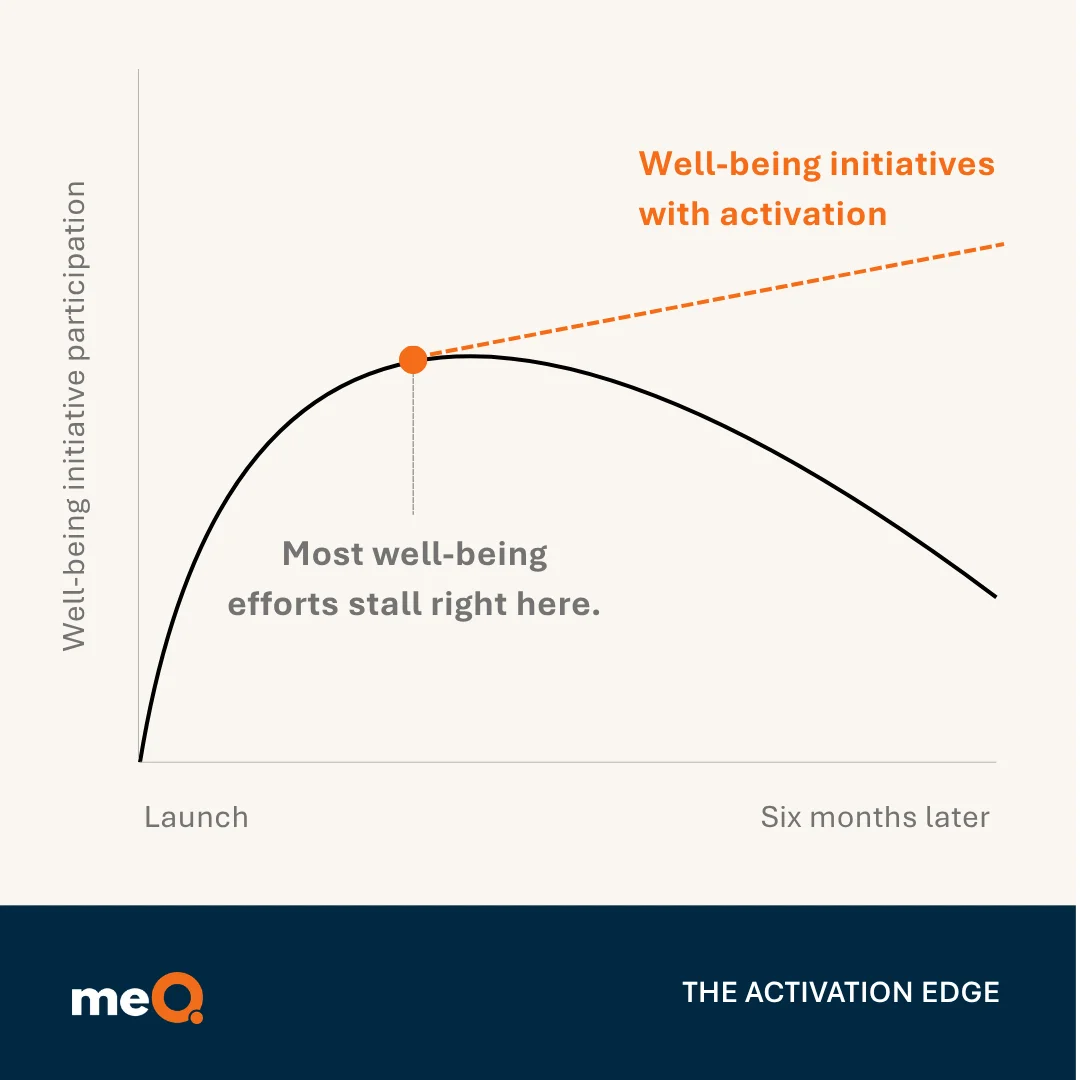
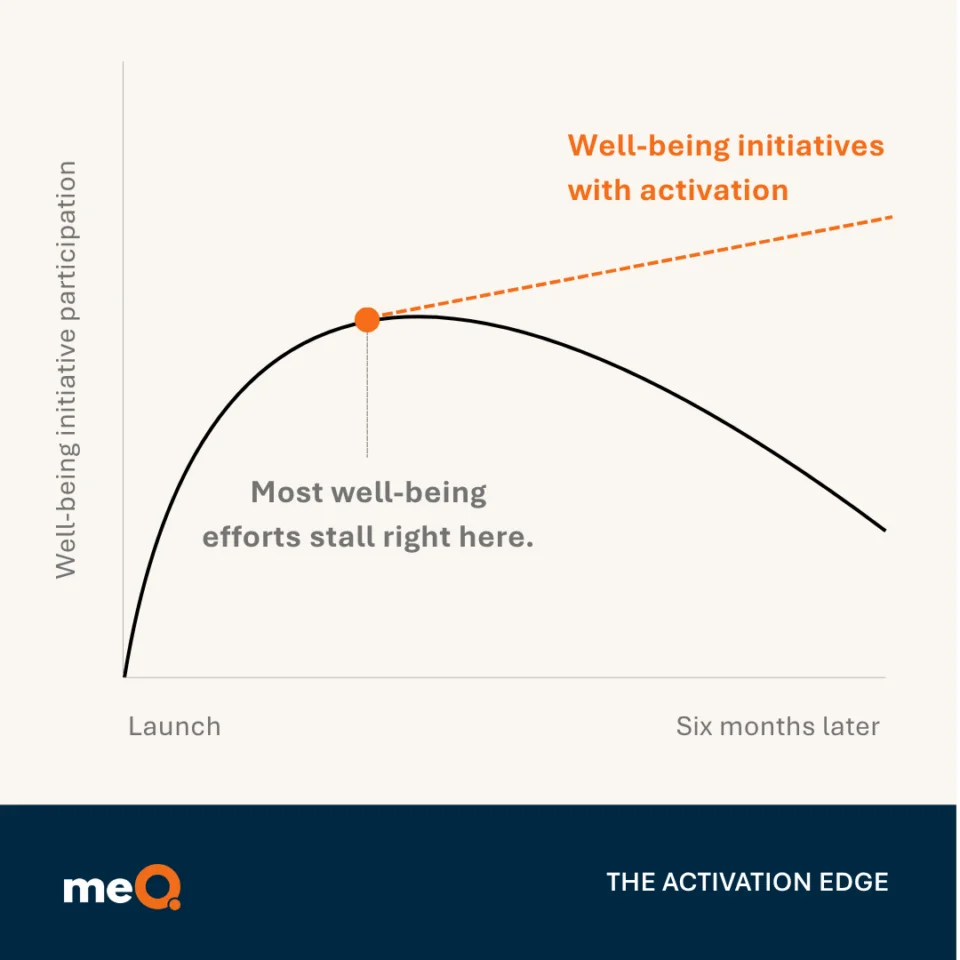
A well-being platform launches. Six months pass. The benefits leader checks progress and finds a knot of problems: participation plateaued in week one, managers haven’t mentioned the program to their teams, and no one’s sure how to change the trajectory before it shows up as pure cost.
Did the platform fail? No. The activation did.
Workforce Activation isn't a feature inside a platform subscription. It's the strategy, infrastructure, and expert support that sits between the technology and the people — and it operates across three distinct channels:
Digital Engagement: Email campaigns, enrollment communications, employee app and intranet placements, and ongoing messaging that reinforces participation beyond the launch window
Manager and Leader Enablement: Talking points and communication guides, toolkits for team conversations, leadership briefings, and activation sessions that equip managers to champion the program with confidence
Workforce Visibility: Posters and displays in common areas, QR codes linking directly to enrollment, and awareness videos that reach employees who never see the digital communications
For global organizations, this also means cultural adaptation, i.e., country-specific campaigns deployed across 130 countries in 17 languages. A program that resonates in the U.S. won't land the same way in India, Japan, or Latin America without it.
Most platforms don't offer this layer. meQ is the only one that does.
The elements missing from most well-being launches aren't complicated. They're just consistently underdone. Here’s what successful launches need:
A multi-channel launch strategy. Email alone doesn't work. Effective launches reach employees through digital outreach, manager-led conversations, and physical workplace visibility.
Manager enablement. Managers are the highest-leverage variable in well-being adoption. When they're equipped with talking points and tools, participation climbs. When they're not, even the best platform stalls.
An ongoing engagement plan. The launch isn't the strategy. Programs with sustained participation have a monthly rhythm of outreach and re-engagement built in from day one.
A feedback loop. Knowing which teams are lagging before the data looks alarming gives HR leaders time to course-correct.
None of these require more technology. They require a structured approach.
The benefits leaders who treat activation as a discipline see it in their participation data:
Participation metrics tell one part of the story. Here's what they translate to at the business level:
These outcomes don't come from better technology. They come from a structured activation strategy applied consistently over time.
The question worth asking isn't whether the program is running. It's whether it's working. Our free program activation checklist covers 10 signs your well-being program may have an activation gap — and gives you a clear picture of where to focus first.